
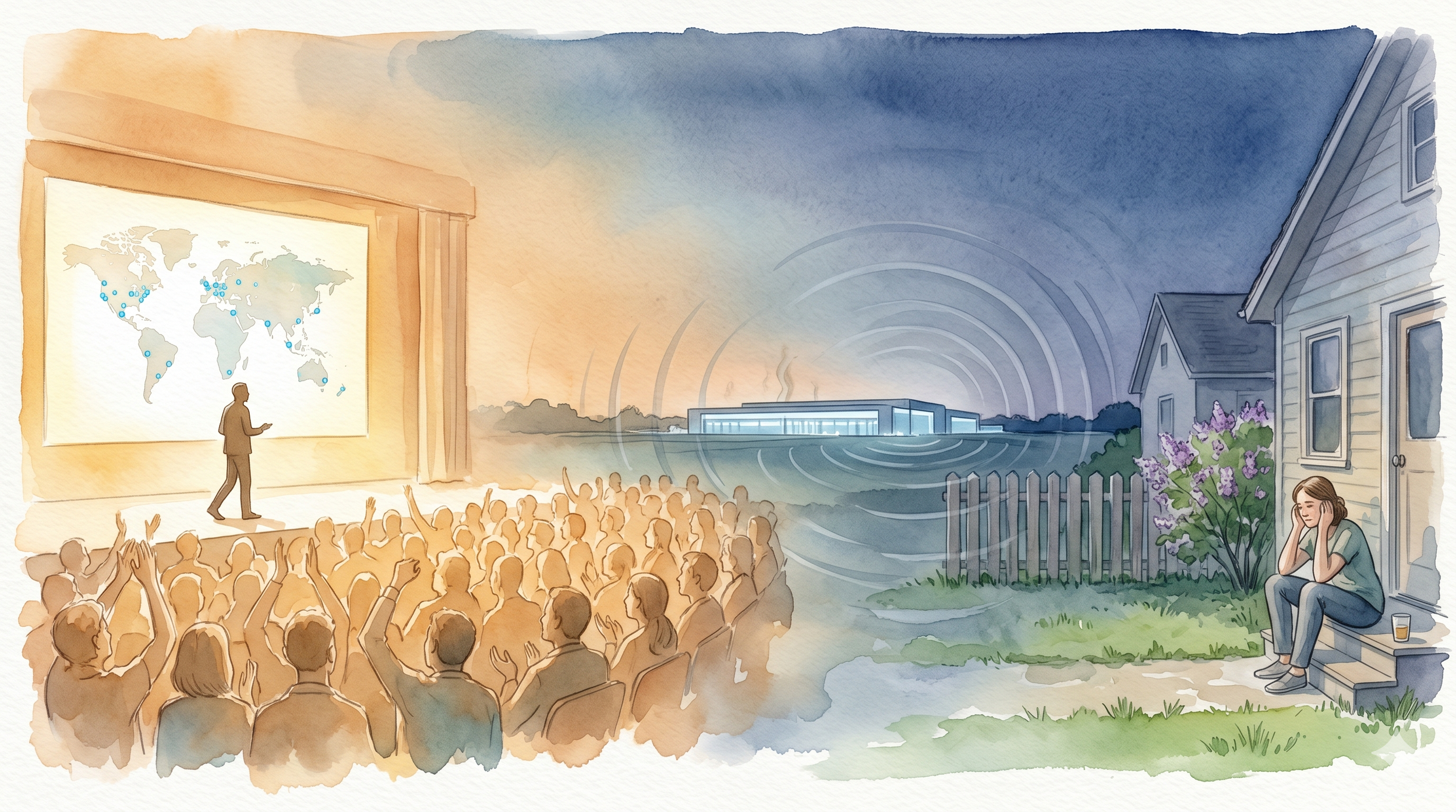
They Cheered the Water
You carry a glass of wine to the back deck the way you have for years, and now there's a hum you feel in your chest — a 315-acre campus running three miles off. At Microsoft Build, Satya Nadella announced the new design uses about as much water a year as one neighborhood restaurant, and the room cheered. They were right to — but that hum is heat being thrown away, the same heat that warms a quarter-million people in Espoo, Finland. The water loop is closed. The heat loop is wide open.

Data Centers: The Tower or The Wall
A windowless hall the size of two aircraft carriers goes up on the cheapest land in the county. It drinks the county's water, pulls from the county's grid, and returns a number on a tax form. This week Pope Leo XIV set two buildings against each other: the Tower of Babel, raised by people who needed no one, and a ruined city rebuilt by neighbors who each took one length of wall. Technology is never neutral — it takes the character of whoever builds it.
Intentional Discovery
Everyone wants the results discovery produces. They hate watching it happen — the weeks where it looks like nothing is getting built and the team is talking to too many people. The head of data center design spent two weeks of the first Covid Christmas trying to get me censured for asking questions; that February he teared up and said, "This is the future." Discovery's most valuable output was never the result. It was the better question.

You Don’t Need a Cheerleader
Every innovator knows the voice that fires right before the risk — the internal register that says wait, fast-follow, let someone else go first. Innovation culture talks constantly about the courage to change. It never talks about the second voice — the one I've trained to show up in the same instant and tell the first voice to take a nap. That's not motivation. That's infrastructure.

Assembling the Array
The work speeds up, and you start to wonder whether the team around it is wide enough for the moment you're in. Most of us feel that gap before we can name it. Repeat innovators answer it by building an array — AI to widen what they can hear across domains, an advisory board seated in rooms they'll never enter, a core team where signal becomes something real. A faint signal received alone is easy to misread. Across a diverse array, it gets clear.
“This is the future. I’ll get you the money.”
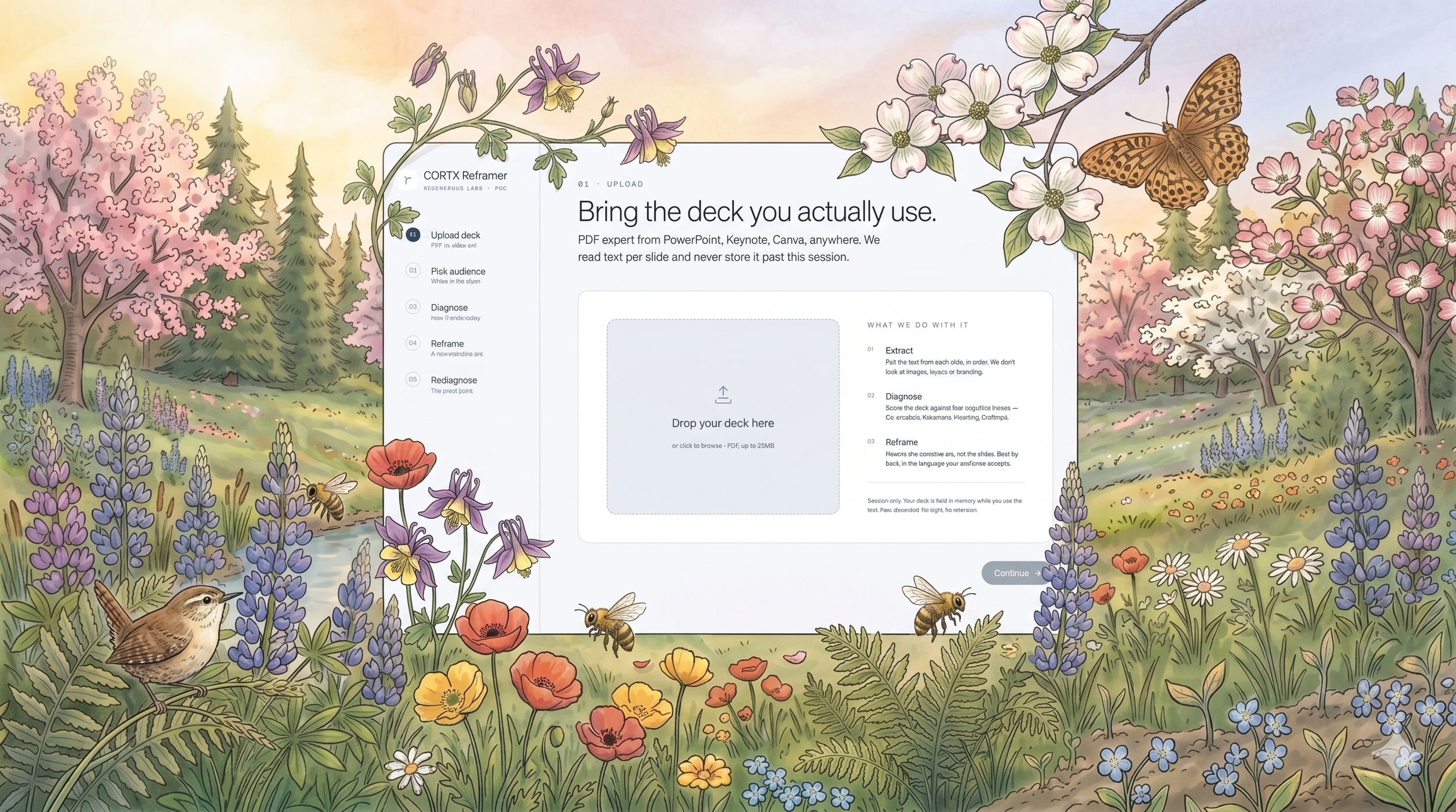
We solve for what we want to say. The audience is solving for what they can hear. Those sound like the same problem — they're not, and the gap between them is where most pitches die. I ran the same vision through the listener's lens and watched a staunch critic tear up. The vision didn't change. The story did.
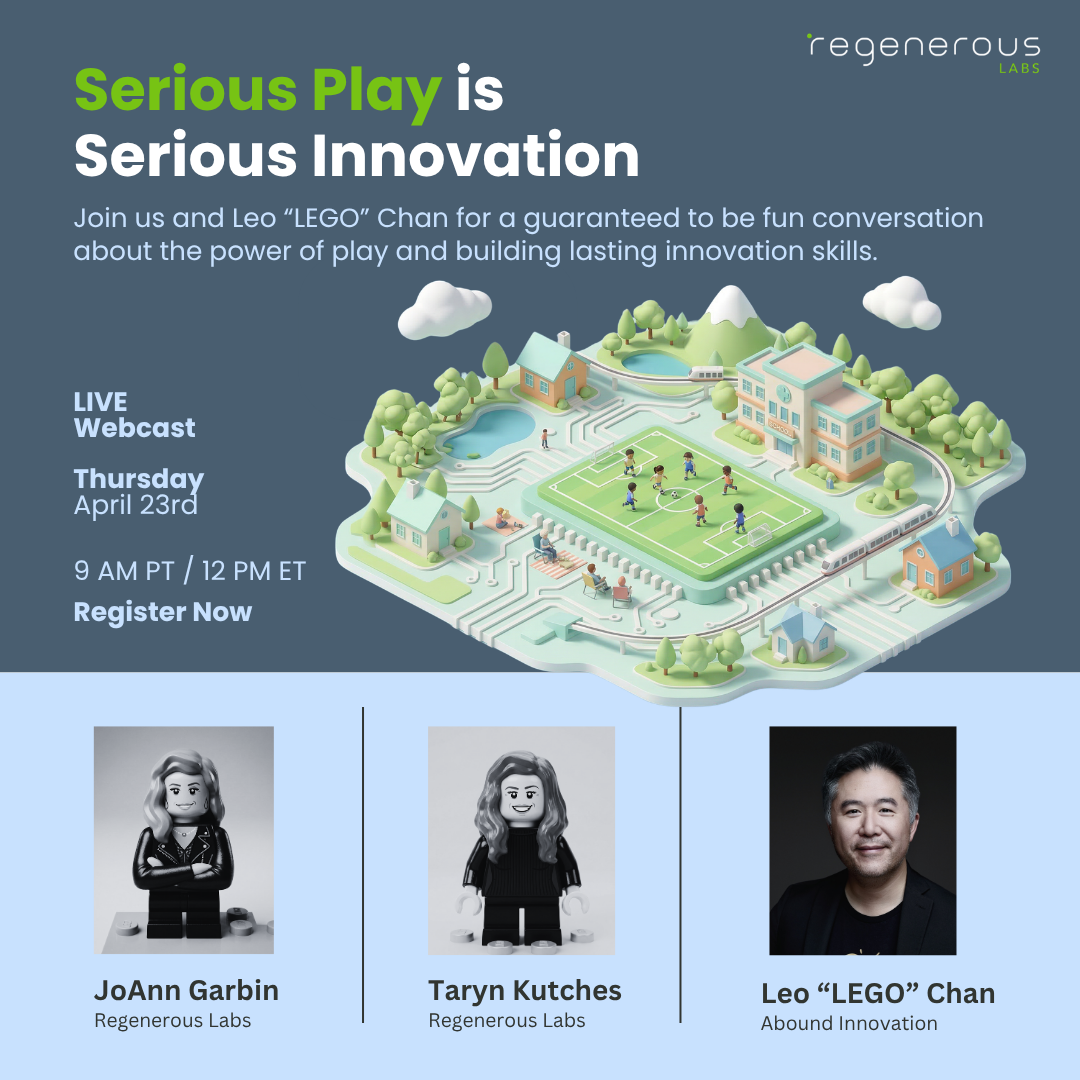
Serious Play is Serious Innovation
Teams that jump straight to solving collapse divergence before it does its work. Conformity shuts down the prefrontal cortex — which means the room where everyone performs professionalism is the room where creativity dies. Leo Chan brought LEGO SERIOUS PLAY to our April webcast and drew a sharper line: play isn't the opposite of serious work. It's how the work gets sharper.
Show-iNstead of-Tell Part II: CANOPY
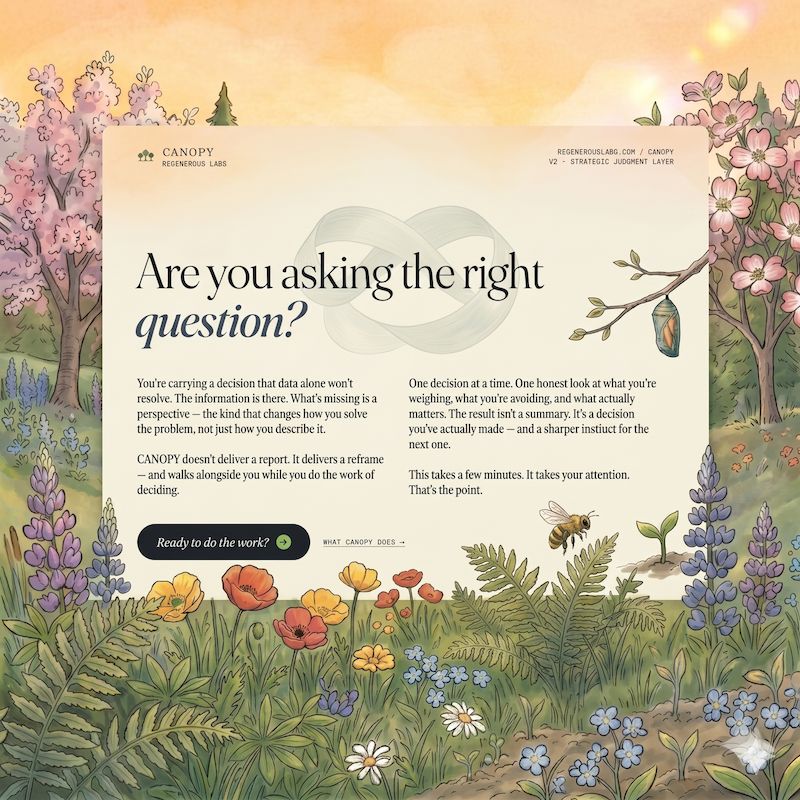
AI can extend what one person builds — but it can't replace what a team holds together. I built CANOPY in a day: a four-step decision tool with multiple expert lenses converging. The architecture held. What didn't hold was everything I forgot to design for while working alone. Isolation isn't just a risk for experts. It's the thesis we keep proving.
Behavior is the Barrier
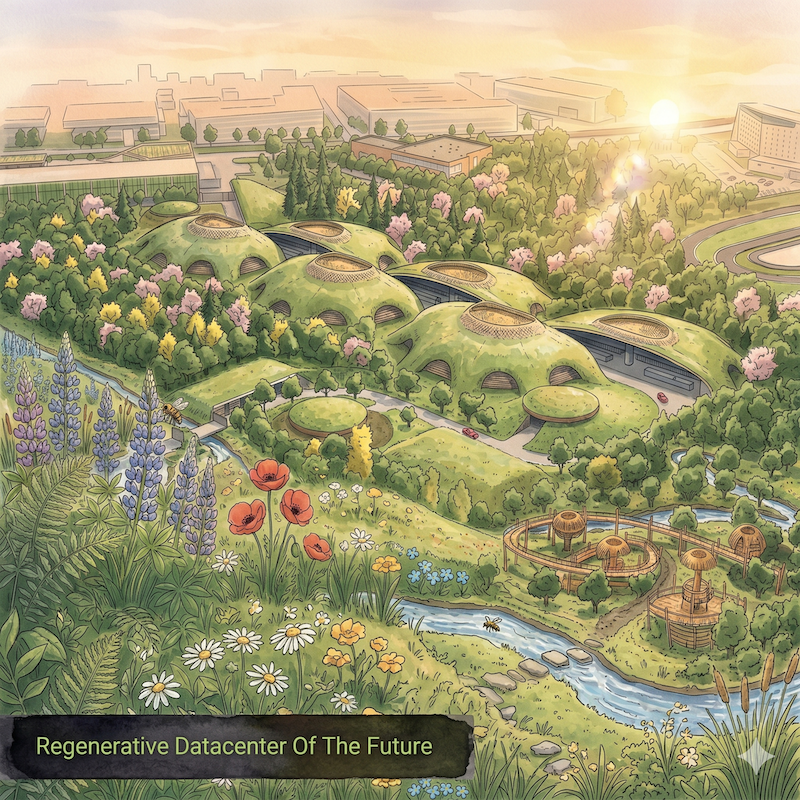
Every technical component of a community-scale, regenerative data center exists today. The design is more desirable for communities, more viable over a ten-year horizon — and everyone who sees it says yes, obviously. Then nothing happens. Four behavioral locks are reinforcing each other. The barrier was never engineering.

Showing, Instead of Telling
It's not what experts know that's hardest to transfer. It's how they see. When I ran the same problem through a standard LLM and an innovation coach built on 77 frameworks from our book, The Insider’s Guide to Innovation at Microsoft, the LLM answered my question. The coach questioned my question — and surfaced what I actually needed.

The Same Old Same Old at New Speeds
AI makes everything faster. But building the wrong thing faster isn't a superpower — it's the same old same old at new speeds. The real advantage isn't expediency. It's expansion: diverging farther, sensing more, testing more possibilities before committing. And then there's the harder question — what happens when the incentive architecture actively punishes the people who try?

Going Dormant
Last week, I watched Jane Goodall’s Famous Last Words episode on Netflix. If you haven’t seen it, the show records intimate interviews with well-known people, then keeps them sealed until after they die. Jane’s was released after she passed in October 2025 at age 91.
A lot of what she said will stay with me. But I’m trying to make a habit out of one thing in particular.

The Insider’s Guide to Innovation at Microsoft: Book FAQ
In this unique guide, you’re not just reading about innovation—you're learning how to do it from the people behind some of the biggest breakthroughs of the last 50 years at one of the most influential and valuable companies in the world.

How to prime your innovator’s antennae
Why do elephants migrate to high ground days before a tsunami and goats know to flee volcanic mountains hours before an eruption? Why is it that some innovators repeatedly find themselves in the right place at the right time with the right thing in their hands?

The Adaptive Cycle of Innovation: 4 ways to avoid the rigidity trap
We don’t control where any given product is within the adaptive cycle, all we can control is how prepared we are for it. Choose to be proactive and get ahead of the curve or be reactive and wait for it to collapse around you.

What can nature teach us about healing the planet: an innovator’s perspective
When it comes to healing the planet, there’s no better perspective I can think to bring to the innovation table than nature itself. Rather than asking ‘how do we get to net zero emissions’ let’s ask ‘how do we become net positive?’